Is Your Attic Costing You More Than You Think?
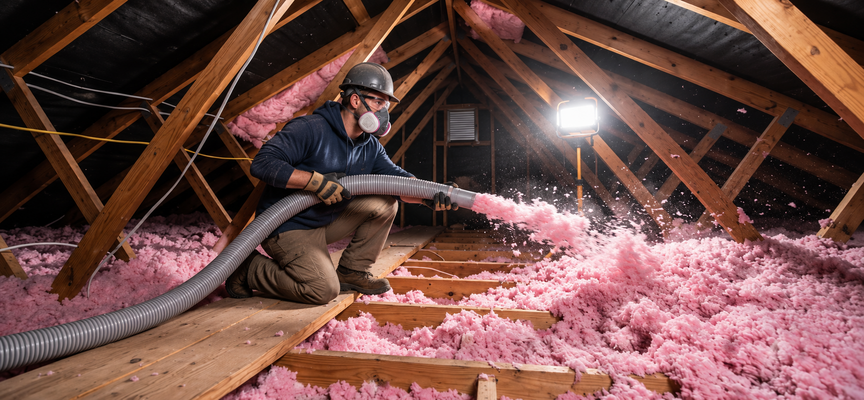
Heating bills rarely jump overnight. They creep up until you start wondering why the house costs more to heat than it used to. When energy use rises, the furnace runs longer, and the upstairs never feels quite right. Looking into attic insulation rebates in Markham can help determine if your attic insulation is the underlying cause. It does not prove the insulation is the problem, but it makes the attic one of the first places worth checking.
Homeowners researching attic insulation rebates in Markham may currently qualify for up to $1,250, depending on the existing R-value and eligible project cost. If you are exploring attic insulation services in Markham, this article explains how attic problems increase energy use, how the rebate is calculated, what changes the price, and what should be checked before work begins.
How An Under-Insulated Attic Can Raise Energy Costs
An under-insulated attic can make the heating system run longer by allowing heat to escape through the top of the house. For homeowners considering attic insulation rebates in Markham, understanding this heat loss is the first step toward improving efficiency. The furnace may still reach the thermostat setting, but it has to replace that lost heat more often. The house stays warm, just at a higher cost.
One question we often ask is whether the upstairs ever catches up with the main floor. A single uncomfortable room could point to a window, duct, or airflow issue. When most of the upper floor feels different, the attic becomes a more likely place to investigate.
That is also why replacing heating equipment does not always solve the problem. We have seen homes with newer furnaces that still struggled with comfort because too much heat was leaving through the attic.
When comparing utility bills, look at how much energy the home used, not only the dollar total. A rate increase can make a bill more expensive even when consumption stays the same. If energy use and heating-system runtime are both increasing while your thermostat settings and household habits have remained similar, there is more reason to investigate where the house may be losing heat.
How Much Can Attic Insulation Rebates In Markham Actually Cover?
Homeowners searching for attic insulation rebates in Markham often see the maximum rebate first. What matters just as much is how the program calculates the amount for an individual home.
As of September 2026, the Home Renovation Savings Program calculates the attic insulation rebate at 50% of the eligible after-tax insulation cost, up to the maximum available for the attic’s starting R-value. For standard attics, the current maximums are:
- $1,250 when the existing insulation is R-12 or lower.
- $1,000 when the existing insulation is above R-12 and no higher than R-25.
- $800 when the existing insulation is above R-25 and no higher than R-35.
The upgraded attic must reach at least R-50.
This means qualifying for the highest maximum does not automatically produce a $1,250 rebate. If an eligible project costs $2,000 after tax, 50% is $1,000. The rebate would therefore be $1,000, even if the home falls within the $1,250 maximum category. If the same eligible work costs $3,000, half would be $1,500, but the rebate would stop at the applicable program maximum.
That is why the existing R-value, eligible project cost, and program limit all matter. You need all three before you can estimate what the rebate may actually cover.
What Should You Confirm Before Counting On An Attic Rebate?
Before treating a rebate as part of your budget, confirm that your home, the proposed work, and the contractor fit the current program requirements. The maximum amount shown online is not an automatic payment, and a rebate received by a neighbour does not confirm what your home will receive.
Before booking the work, find out:
- Whether your home and primary heating source meet the eligibility rules.
- Whether eligibility must be confirmed before any attic work begins.
- Whether the contractor participates in the applicable attic rebate stream.
- How the attic’s existing insulation level will be documented.
- Whether the planned work can insulate the full roof assembly and reach the required R-value.
- Who will complete the application and submit the supporting paperwork.
A formal home energy assessment is not required for the current attic-only rebate stream. Eco Star’s free attic assessment is different. It is a contractor’s inspection of the attic used to identify its condition and recommend the appropriate work, not a whole-home energy audit.
Once those questions are answered, the rebate becomes a number you can plan around instead of an amount you are simply hoping to receive.
Small Problems In The Attic Can Lead To Bigger Heating Bills
An attic does not have to be missing all of its insulation to waste energy. We often find small gaps around ceiling penetrations, insulation that has settled over time, or areas that were never properly covered during the original installation. None of those problems look dramatic on their own, but together they can make the heating system work much harder than it should.
Some of the physical signs worth paying attention to include:
- Ceiling joists that remain visible through thin insulation.
- Bare or shallow areas around the perimeter of the attic.
- Gaps around the attic hatch, pipes, wiring, or ceiling penetrations.
- Missing or damaged baffles near the edges of the roof.
- Soffit openings that appear to be covered by insulation.
- Frost, staining, or damp insulation during colder months.
These signs do not automatically mean the attic needs a complete insulation replacement. They show where heat, air, or moisture may be moving in ways it should not. Addressing these issues early can help improve your home’s energy efficiency while allowing you to explore eligibility for available attic insulation rebates in Markham.
What Does A Free Attic Assessment Actually Show You?
Looking through the attic hatch only tells part of the story. We have inspected attics that looked well insulated from the opening, only to find settled insulation, thin coverage around the edges, hidden air leaks, or ventilation issues once we got inside. Those are the kinds of problems that quietly affect comfort and energy bills without giving homeowners an obvious warning.
Some homes simply need more insulation. Others first need air leaks sealed or ventilation corrected before another layer of insulation makes sense. When extra insulation is the right solution, blow-in attic insulation is often recommended because it spreads evenly across open attic spaces and works well over suitable existing insulation. The right approach depends on what the attic is telling you, not on a one-size-fits-all recommendation.
That is why Eco Star Home Services Co. starts with a free attic assessment instead of recommending insulation straight away. Once the attic has been properly inspected, it becomes much easier to understand what work is actually needed, whether blow-in attic insulation is the right solution, what the project may cost, and which rebate opportunities may apply.
What Actually Changes The Cost Of An Attic Upgrade?
The size of the attic matters, but it rarely tells the whole story. A straightforward top-up over dry, suitable insulation is a different job from an attic where old material needs to be removed, access is restricted, or extra labour is required around fixtures and hard-to-reach edges.
We have looked at homes with nearly identical floor plans where the work was completely different. One attic needed additional insulation with very little preparation. The other required old material to be removed and several restricted areas prepared before the upgrade could begin. You would never know that by measuring the square footage alone.
Those details explain why two prices for similar-sized attics can be far apart. One may cover a straightforward top-up. The other may include removal, preparation, difficult access, and more labour. Breaking the price into those parts gives the homeowner a much clearer idea of what is driving the cost.
What Should Be Included In An Attic Insulation Quote?
A useful quote should explain the preparation, material, installation, and final checks included in the price. A total without that detail makes it difficult to compare one contractor with another.
Before choosing a quote, look for clear answers to a few practical questions:
- What preparation work is included before installation begins?
- Will damaged or unsuitable insulation be removed if necessary?
- What type of insulation will be installed?
- How many bags or how much material does the quote include?
- What settled depth and coverage should the finished installation achieve?
- How will the house be protected and cleaned during the work?
- How will the final depth and coverage be checked?
- What work is specifically excluded from the price?
The lowest quote is not automatically the best value. Two prices may look very different because one covers preparation, installation, protection, and cleanup while the other covers installation alone.
Ask each contractor to explain what is not included and how additional work will be approved if something unexpected is found. That conversation often tells you more than the number at the bottom of the page.
What Should Happen Before Blow-In Attic Insulation Is Installed?
When blow-in attic insulation is the right choice, blowing in the material is usually the final step, not the first one. The attic needs to be checked and prepared before another layer makes existing problems harder to reach.
That preparation can include sealing openings around pipes, wiring, ceiling fixtures, and the attic hatch. The crew may also need to install or adjust baffles so insulation does not block airflow at the soffits. Bathroom exhaust ducts should vent outdoors, and any moisture source needs attention before it is covered.
Natural Resources Canada makes the same point in its guide to roofs and attics: blown-in insulation should not be expected to replace proper air sealing, moisture control, or ventilation.
Once the attic is ready, blown-in material can be distributed across open spaces and around areas that are difficult to cover evenly with batts. The installer should work to the required settled depth, keep ventilation paths clear, and check the coverage before closing the attic.
Many straightforward residential upgrades can be completed in a day. An attic that needs insulation removed, moisture corrected, or other repairs may take longer. Discussing these details upfront helps ensure the project stays aligned with the rules for attic insulation rebates in Markham before the crew arrives, rather than discovering issues halfway through the job.
Is An Attic Insulation Upgrade Worth It?
An attic insulation upgrade is worth considering when an inspection shows that the attic contributes to heat loss, uneven temperatures, or longer HVAC run times. Exploring attic insulation rebates in Markham can make the upgrade far more affordable. However, high energy bills are not always caused by poor insulation, and not every attic needs to be stripped and rebuilt.
Sometimes the right recommendation is a simple top-up. Other homes need broader attic repairs before new insulation can do its job. There are also homes where the attic is already performing well, and the comfort problem needs to be investigated somewhere else. Looking first keeps you from paying for the wrong solution.
The rebate can lower the upfront cost, but the longer benefit is having an attic that does a better job of holding heat in winter and slowing heat gain in summer. Homeowners may also notice more even temperatures and less demand on their heating and cooling equipment. Exact savings vary from one home to another, so they should never be promised from a quick look at the utility bill.
If you are wondering whether your attic is costing more than it should, contact Eco Star Home Services Co. to schedule a free attic assessment. We will show you what is already there, explain whether blown-in insulation makes sense, and help confirm which rebate opportunity may apply before any work is booked.