Is Your HVAC System Really Causing High Energy Bills in Markham?
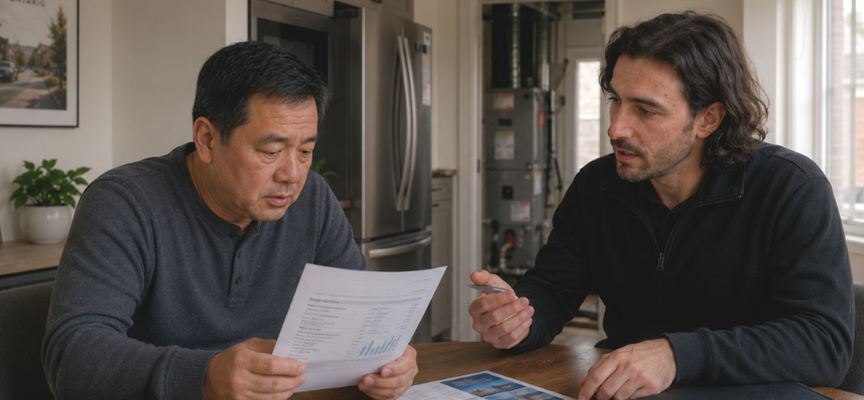
Most homeowners assume rising energy bills mean it’s time for an HVAC upgrade.
Sometimes they’re right.
Older furnaces, aging air conditioners, and declining system efficiency can absolutely increase operating costs while making a home less comfortable.
The problem is that many homeowners start replacing equipment before identifying what’s actually driving the extra energy use.
Homeowners researching professional HVAC services in Markham are often trying to answer the same question:
Is my HVAC system causing the problem, or is something else forcing it to work harder than it should?
The answer isn’t always obvious.
In many homes, rising energy bills can be traced back to the equipment, the home itself, or a combination of both. Understanding the difference is often the first step toward making the right upgrade decision and getting better long-term results from the investment.
Why Energy Bills Keep Rising Even When Your HVAC System Works
Rising energy bills can often be traced back to an HVAC system that is no longer operating efficiently.
Older furnaces, aging air conditioners, worn components, and equipment that runs longer than it should can all increase energy consumption over time. In many homes, upgrading outdated heating and cooling equipment leads to noticeable improvements in both comfort and operating costs.
The challenge is that HVAC equipment isn’t always the cause.
Many homeowners experience rising utility bills even when their system is functioning exactly as designed.
When a home loses heat during winter or gains excessive heat during summer, the HVAC system has no choice but to work harder to maintain the desired temperature. The equipment responds by running longer and using more energy, even though the real issue may be occurring elsewhere in the home.
That’s why identifying the source of the problem is often more important than assuming the equipment needs to be replaced.
According to Natural Resources Canada, improving a home’s overall energy performance can significantly reduce heating and cooling demands.
Why HVAC Performance Depends on More Than Equipment
Many homeowners searching for HVAC Markham solutions expect the conversation to focus entirely on furnaces, air conditioners, and heat pumps.
Those systems are important.
However, heating and cooling equipment is only one part of a home’s overall comfort and efficiency.
Insulation levels, air leakage, and heat transfer all influence how hard an HVAC system needs to work throughout the year.
That’s why two homes with similar HVAC equipment can experience very different energy bills and comfort levels.
The equipment matters.
The conditions it’s operating in matter just as much.
Understanding that relationship helps homeowners make more informed decisions when evaluating potential upgrades.
HVAC Performance Depends On:
- Equipment efficiency
- Insulation levels
- Air leakage throughout the home
- Heat transfer through walls and ceilings
- Home layout and how the space is used
A problem in any one of these areas can affect comfort, energy consumption, and overall system performance.
Why HVAC Upgrades Don’t Always Start With Equipment
Many homeowners assume rising energy bills automatically mean it’s time for a new HVAC system.
Sometimes that’s true.
Older furnaces, aging air conditioners, and declining equipment efficiency can absolutely increase operating costs over time.
However, replacing equipment isn’t always the first answer.
A heating and cooling system can only perform as well as the environment around it. That’s why experienced HVAC professionals look beyond the equipment itself when evaluating comfort and efficiency concerns.
One commonly overlooked factor is attic insulation.
The attic plays a major role in regulating indoor temperatures throughout the year, directly affecting how hard heating and cooling equipment must work.
During winter, insufficient insulation allows heat to escape through the roof. During summer, excessive attic heat can transfer into the living space below.
Both situations force HVAC equipment to work harder and consume more energy.
Common Signs Your Attic May Be Affecting HVAC Performance
- Upstairs rooms feel hotter during summer
- Bedrooms feel colder during winter
- The HVAC system runs longer than expected
- Utility bills continue increasing
- Certain rooms never seem to match the thermostat setting
These symptoms often develop gradually, making them easy to overlook until comfort and efficiency noticeably decline.
Signs It May Be Time For An HVAC Upgrade
While insulation can influence performance, there are situations where the HVAC system itself is the source of the problem.
Equipment naturally becomes less efficient as it ages. Components wear out, repairs become more frequent, and energy consumption gradually increases.
Some common signs that it may be time to consider an HVAC upgrade include:
- Rising utility bills despite consistent household usage
- Frequent repair calls
- Uneven temperatures throughout the home
- Excessive runtime during heating or cooling seasons
- Equipment approaching the end of its expected lifespan
- Reduced comfort compared to previous years
Modern HVAC systems, including high-efficiency heat pumps, often provide improved comfort, lower operating costs, and better overall performance than older equipment.
When HVAC Equipment Is the Problem And When It Isn’t
Not every comfort issue points to insulation.
Sometimes the equipment genuinely needs attention.
Older systems often become less efficient with age. Components wear out. Repairs become more frequent. Performance declines.
In those situations, replacing the equipment may be the right decision.
Many homeowners find that upgrading to a modern HVAC system improves comfort while reducing energy consumption. High-efficiency furnaces, air conditioners, and heat pumps are designed to deliver more performance while using less energy than older equipment.
Other homes experience a different problem.
The equipment is functioning properly, but the house continues losing conditioned air. The HVAC system compensates by running longer and consuming more energy.
According to Canada Mortgage and Housing Corporation (CMHC), insulation is an important component of maintaining energy efficiency and indoor comfort in Canadian homes.
That’s why experienced HVAC professionals evaluate the complete picture before recommending a solution.
Sometimes the answer is a heat pump.
Sometimes it’s improved attic insulation.
Sometimes it’s a combination of both.
The key is identifying the real cause before investing in upgrades.
HVAC May Be the Issue If:
- The system is approaching the end of its service life
- Repairs are becoming more frequent
- Heating or cooling performance has steadily declined
- Energy consumption continues increasing despite normal home conditions
The Home May Be the Issue If:
- Certain rooms are consistently uncomfortable
- Attic insulation is outdated or insufficient
- Drafts are noticeable throughout the home
- The HVAC system appears to be functioning normally but still runs excessively
A professional assessment helps determine which category your home falls into before major upgrade decisions are made.
When It Makes Sense To Upgrade HVAC, Insulation, Or Both
Every home reaches that decision differently.
If the HVAC system is relatively modern but energy bills continue rising, insulation may deserve closer attention.
If the equipment is aging, requiring frequent repairs, or struggling to maintain comfort, an HVAC upgrade may provide greater value.
Many homeowners ultimately benefit from addressing both areas together.
A properly insulated home allows heating and cooling equipment to operate more efficiently. At the same time, modern HVAC technology can deliver better performance when conditioned air remains inside the home.
The goal isn’t simply to install new products.
The goal is to create a home that stays comfortable while using energy more effectively.
For some homeowners, that may mean upgrading insulation first. For others, it may involve combining insulation improvements with a heat pump or HVAC replacement to achieve the best long-term results.
Partner With Markham’s Trusted HVAC Team
Lower energy bills rarely come from a single improvement.
They’re usually the result of identifying where energy is being lost and making the right upgrades in the right order.
Eco Star Helps Homeowners Evaluate:
- Heat pumps and HVAC upgrades
- Attic insulation improvements
- Home comfort concerns
- Energy efficiency opportunities
- Whole-home performance issues
At Eco Star, that means looking beyond the equipment itself. Heating, cooling, insulation, and overall home performance all contribute to long-term comfort and efficiency.
Whether the solution involves a heat pump, a furnace replacement, an air conditioning upgrade, improved attic insulation, or a combination of improvements, understanding the source of the problem is the first step.
If you’re considering an HVAC upgrade or looking for ways to improve energy efficiency, contact us today. A professional assessment can help identify the source of the problem and determine whether the right solution is new equipment, improved insulation, or a combination of both.